








Jamun Seed (Syzygium cumini): Traditional Use & Why Whole-Seed Powder Matters

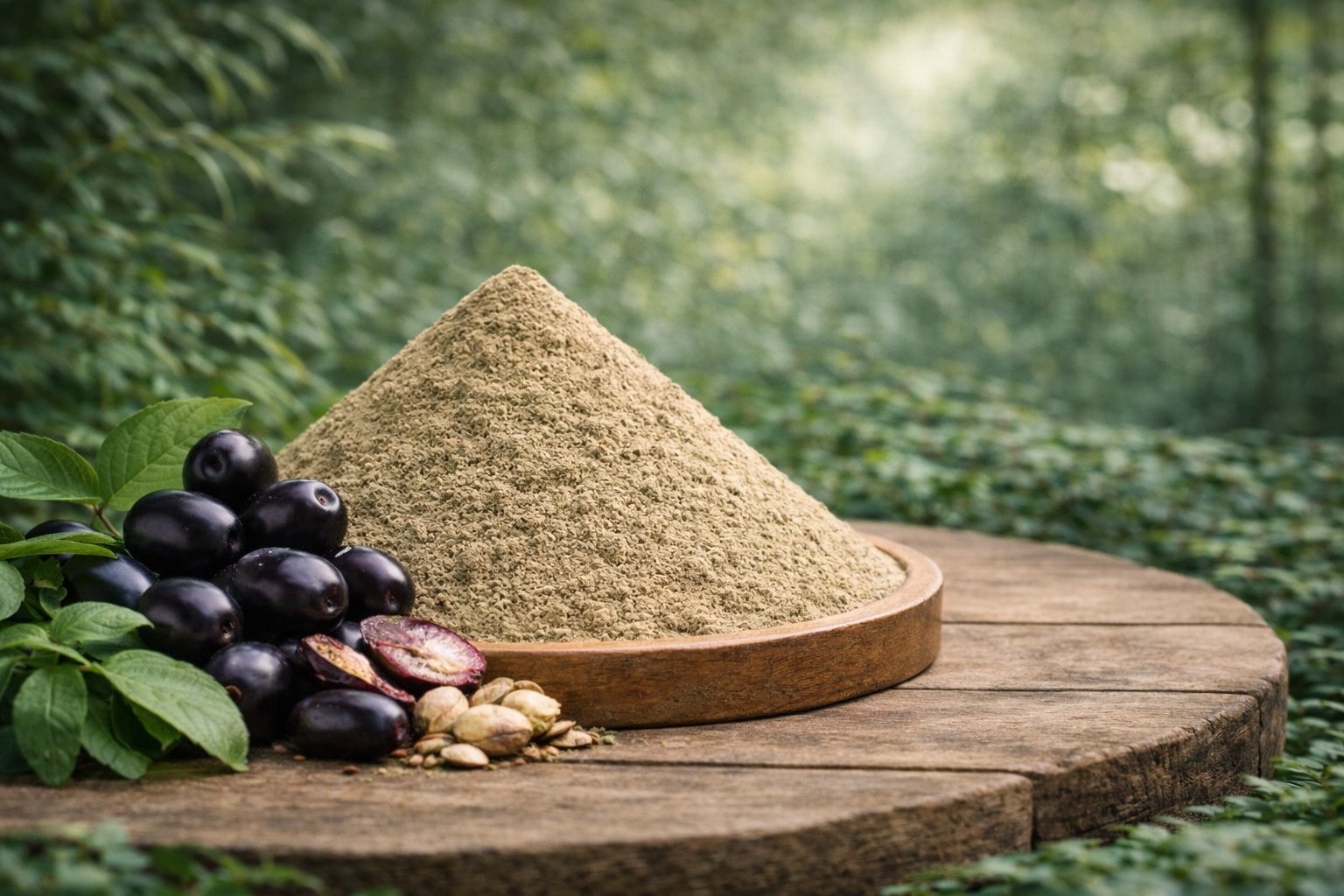
Jamun, botanically known as Syzygium cumini, is a tropical fruit-bearing tree native to the Indian subcontinent. In traditional systems—especially Ayurveda—the seed of the jamun fruit has been used far more extensively than the pulp.
Historically, jamun seed has been consumed as dried seed powder, not as a refined extract.
This guide explains:
- What Jamun seed is
- How it has been traditionally used
- What modern research focuses on
- Why organic jamun seed powder is not inferior to extracts
🌿 Shop the CalmEarth range → Browse our Fruit & Berry Superfoods collection and discover more from our full herbal range.
This content is for educational purposes only and does not provide medical advice.
What Is Jamun Seed?
Jamun seed comes from the ripe fruit of Syzygium cumini. After removing the pulp, the seed is:
- Cleaned
- Dried
- Finely powdered
The whole seed naturally contains:
- Alkaloids
- Polyphenols
- Tannins
- Flavonoids
- Natural fiber
These compounds exist together in the intact seed, forming a balanced phytochemical profile.
Traditional Use of Jamun Seed
In Ayurveda and folk traditions, jamun seed powder has been used as:
- A standalone seed powder
- An ingredient in classical Ayurvedic formulations
- A long-term, food-adjacent botanical
- A powdered preparation mixed with water or food
Classical texts and traditional practice consistently reference jamun seed churna, not extracts.
👉 Whole-seed powder is the traditional standard.
What Modern Research Has Studied
Modern studies on Syzygium cumini often evaluate:
- Seed powder
- Broad seed extracts prepared from whole seed material
Importantly, research focuses on seed-derived compounds, not isolated commercial extracts.
Seed & Phytochemical Research
A review in Journal of Ethnopharmacology discussed the phytochemical composition of jamun seeds, highlighting the importance of whole-seed material.
Ayurvedic & Botanical Reviews
Research in Pharmacognosy Reviews emphasized jamun seed powder as the classical preparation in traditional medicine.
👉 Key Insight:
Jamun research supports whole-seed integrity, not extract isolation.
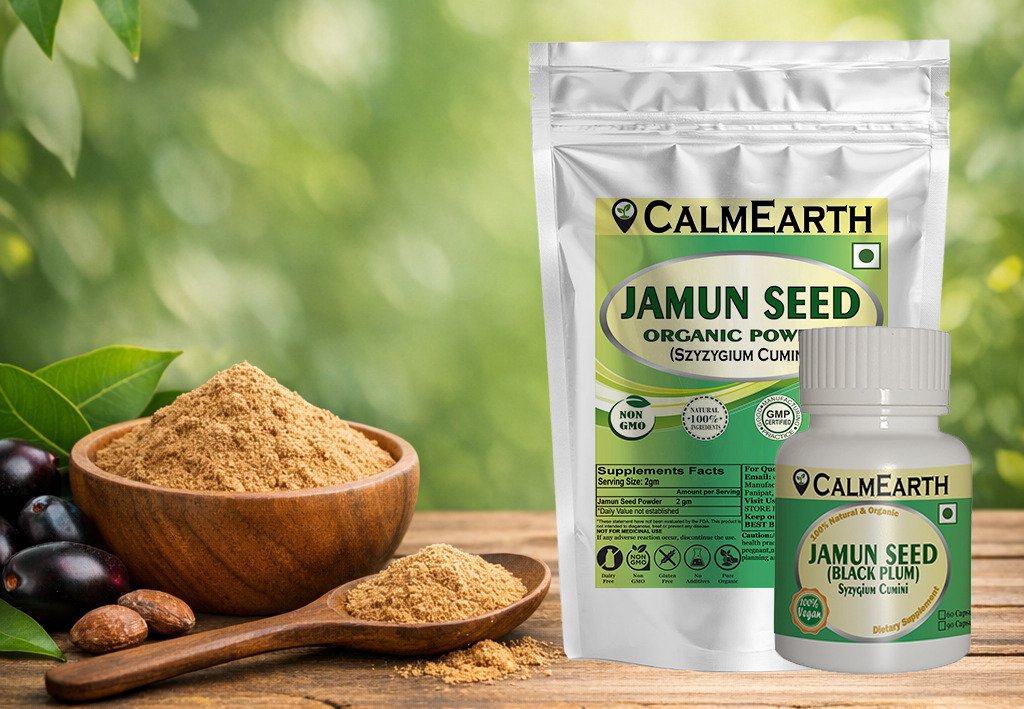
Jamun Seed Powder vs Extracts (Critical Clarification)
Organic Jamun Seed Powder
- Uses the entire dried seed
- Preserves natural tannins and polyphenols
- Reflects Ayurvedic and traditional use
- Suitable for long-term routines
- 👉 View Jamun Seed Organic Powder
- 👉 View Jamun Seed Organic Capsules
Jamun Seed Extracts
- Concentrate selected compounds only
- Alter the natural seed matrix
- Do not represent classical preparation methods
👉 Conclusion:
For jamun, organic whole-seed powder is the authentic, primary, and preferred format, not an inferior alternative.
Why Organic Matters for Jamun Seed
Jamun seeds are:
- Harvested from fruit
- Dried and consumed directly
Organic sourcing ensures:
- No pesticide residues
- Cleaner seed phytochemical profile
- Better suitability for long-term use
Important Reminder
Scientific research studies botanicals under controlled conditions.
Retail dietary supplements are not evaluated the same way.
Final Thoughts
Jamun seed (Syzygium cumini) is not an extract-based supplement.
It is a seed-centric Ayurvedic botanical, traditionally consumed as a whole-seed powder. Organic jamun seed powder preserves the integrity, balance, and intent of this classical ingredient.
Compliance Disclaimer
This article is for educational purposes only.
It does not provide medical advice.
Dietary supplements are not intended to diagnose, treat, cure, or prevent any disease.