











Turmeric Ginger Garlic Capsules: Ayurvedic Uses, Health Benefits & Why This Blend Is Powerful

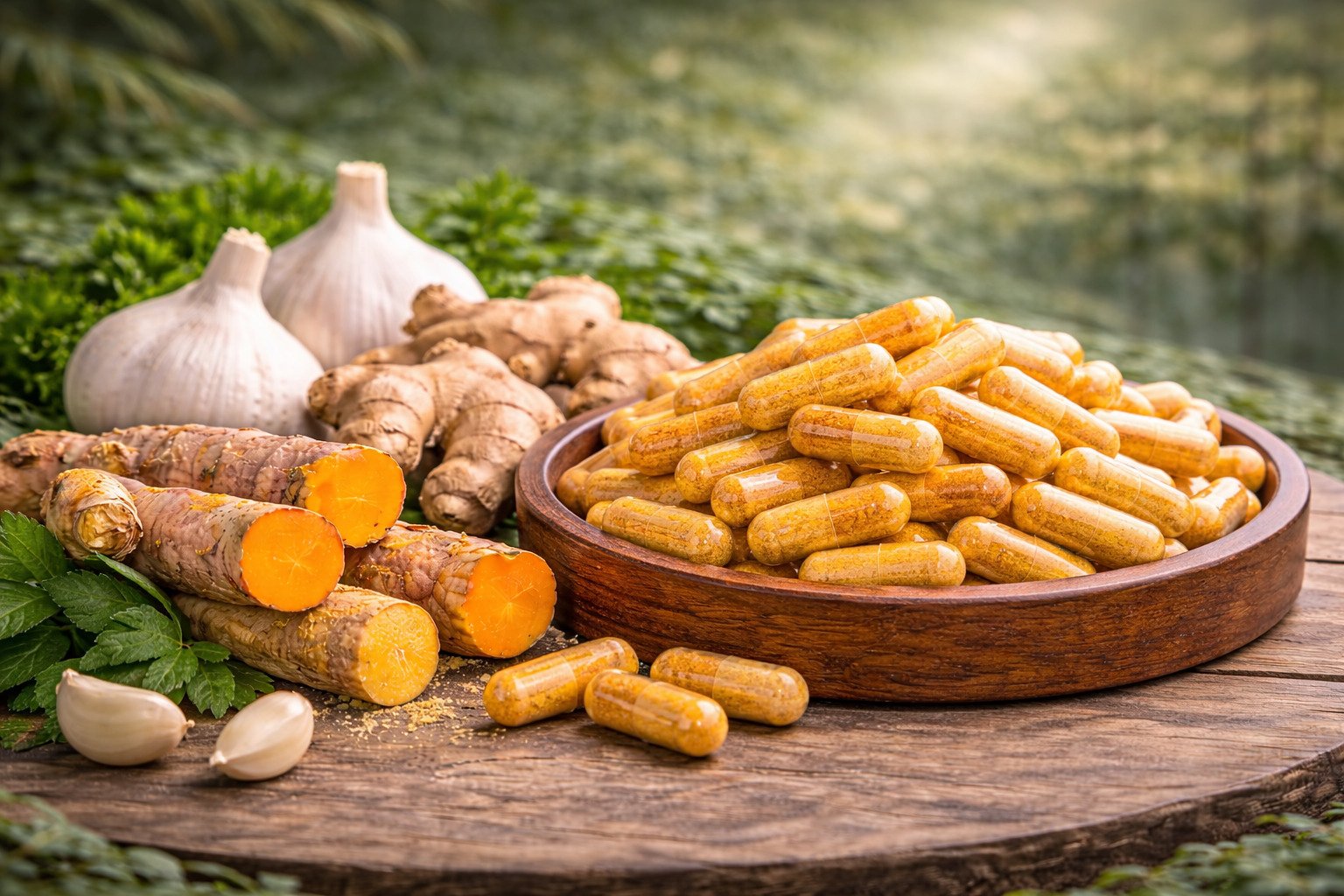
Turmeric, Ginger, and Garlic are among the most widely used herbs and foods in traditional medicine systems across India, China, the Middle East, and Europe. In Ayurveda, these three are valued for their ability to support digestion, circulation, immunity, and inflammatory balance.
Turmeric Ginger Garlic Capsules, when combined, they form a synergistic herbal blend that supports multiple body systems simultaneously.
This article explains:
- Ayurvedic use of turmeric, ginger, and garlic
- Health benefits of each herb
- Why this combination works better together
- Supporting scientific studies
- Suggested serving guidance
🌿 Shop CalmEarth Ginger → Explore our full Ginger collection in powder, capsule & extract forms.
This article is for educational purposes only and does not replace medical advice.
Ayurvedic Philosophy Behind This Blend
Ayurveda emphasizes:
- Strong digestion (Agni)
- Removal of metabolic toxins (Ama)
- Free circulation of nutrients and energy
Turmeric, Ginger, and Garlic are often used together because they:
- Stimulate digestion
- Support circulation and detox pathways
- Balance Kapha and Vata doshas
- Reduce stagnation in the body
This blend is especially valued in modern sedentary lifestyles and seasonal transitions.
Turmeric (Curcuma longa)
Ayurvedic Role
Turmeric (Haridra) is:
- Tridoshic (balances all three doshas)
- Especially supportive for Pitta and Kapha
Traditional Uses in Ayurveda
Turmeric has been traditionally used for:
- Supporting joints and mobility
- Purifying blood (Rakta Shodhana)
- Supporting liver and skin health
- Maintaining immune balance
It is traditionally consumed daily, often mixed with food or other herbs.
Modern Research
Research suggests turmeric may support:
- Inflammatory balance
- Antioxidant protection
- Joint and metabolic health
References:
- Hewlings & Kalman, Foods (2017)
- Gupta et al., Journal of Traditional and Complementary Medicine (2013)
Ginger (Zingiber officinale)
Ayurvedic Role
Ginger is known as Vishwabheshaja (the universal medicine).
- Strongly stimulates digestive fire (Agni)
- Reduces Ama
- Enhances absorption of other herbs
Traditional Uses in Ayurveda
Ginger has been used for:
- Digestive discomfort
- Joint and muscle stiffness
- Circulatory support
- Respiratory balance
It is commonly added to formulations to increase effectiveness of other herbs.
Modern Research
Studies show ginger may support:
- Digestion and gut motility
- Joint comfort
- Anti-inflammatory pathways
References:
- Mashhadi et al., International Journal of Preventive Medicine (2013)
- Daily et al., Pain Medicine (2015)
Garlic (Allium sativum)
Ayurvedic Role
Garlic (Lashuna) is:
- Strongly warming
- Pacifies Vata and Kapha
- Enhances circulation and metabolism
Traditional Uses in Ayurveda
Garlic has been used for:
- Supporting heart and circulation
- Enhancing immunity
- Reducing heaviness and stagnation
- Supporting joint and muscle strength
Garlic is traditionally recommended for deep-seated imbalances related to cold and stagnation.
Modern Research
Research suggests garlic may support:
- Cardiovascular health
- Immune function
- Antioxidant activity
References:
- Bayan et al., Avicenna Journal of Phytomedicine (2014)
- Rahman & Lowe, Journal of Nutrition (2006)
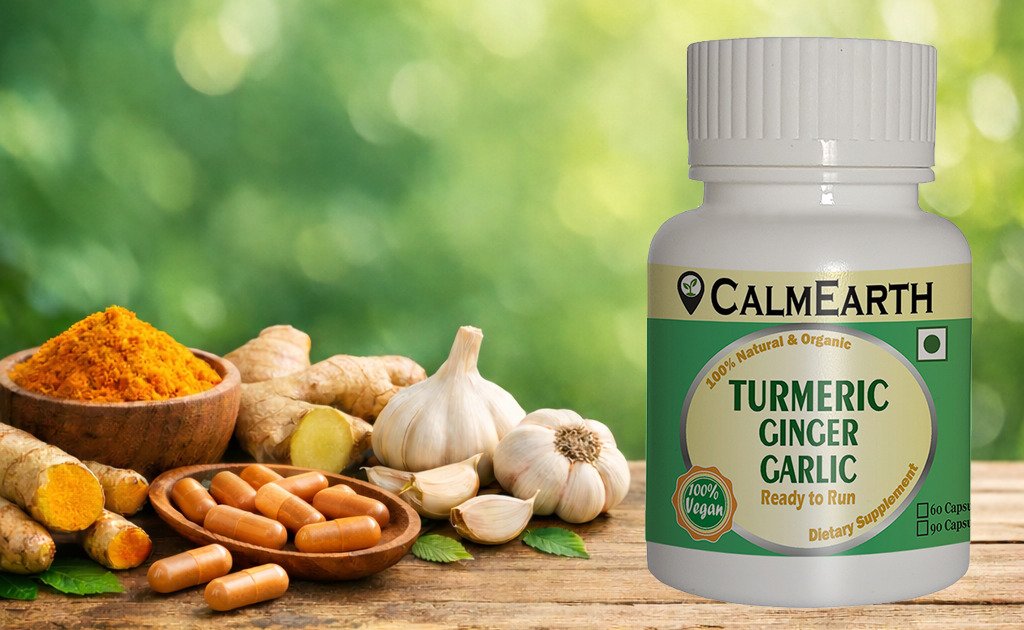
👉 View Turmeric Ginger Garlic Capsules
Composition of Turmeric, Ginger & Garlic Capsules
This capsule blend is formulated using whole herbal powders, carefully balanced to reflect traditional Ayurvedic usage while remaining suitable for daily routines.
Per Capsule Composition (500 mg)
- Turmeric Root Powder (Curcuma longa) – 200 mg
- Ginger Root Powder (Zingiber officinale) – 150 mg
- Garlic Bulb Powder (Allium sativum) – 150 mg
All ingredients are used in their natural powdered form, not as extracts or isolated compounds. This preserves the full-spectrum plant profile as traditionally consumed in food and Ayurvedic formulations.
Why These Ratios Are Traditionally Logical
From an Ayurvedic formulation perspective:
- Turmeric (200 mg) forms the foundation, supporting inflammatory balance and detox pathways
- Ginger (150 mg) strengthens digestion (Agni) and improves bioavailability
- Garlic (150 mg) supports circulation and metabolic activity
The ratio ensures:
- No single herb dominates the formula
- Warming herbs are balanced
- The blend remains suitable for long-term, consistent use
Why Turmeric, Ginger & Garlic Work Better Together
Ayurvedic Synergy Explained
| Herb | Primary Action |
|---|---|
| Turmeric | Inflammatory balance, detox support |
| Ginger | Digestion, absorption, circulation |
| Garlic | Circulation, immunity, metabolic strength |
Synergistic benefits of the blend:
- Ginger enhances digestion and absorption of turmeric and garlic
- Garlic improves circulation, helping herbs reach tissues
- Turmeric supports inflammatory balance during long-term use
This makes the blend useful for:
- Joint and muscle comfort
- Immune and seasonal support
- Metabolic and circulatory balance
Benefits of Turmeric, Ginger & Garlic Capsules
When taken as a blended capsule, this formulation may support:
- Digestive efficiency
- Joint and mobility comfort
- Circulatory health
- Immune resilience
- Reduction of metabolic stagnation
Capsules also:
- Eliminate strong taste and odor
- Provide consistent daily intake
- Simplify multi-herb supplementation
Formula Overview (Example)
A typical capsule blend may include whole herbal powders, such as:
- Turmeric Root Powder
- Ginger Root Powder
- Garlic Bulb Powder
(Exact ratios can vary depending on formulation goals.)
Suggested Serving Guidance
- 1–2 capsules per day
- Best taken with meals
- Can be used seasonally or long-term
Individuals on medication or with medical conditions should consult a healthcare professional.
Final Thoughts
Turmeric, Ginger, and Garlic form a time-tested herbal trio used across Ayurveda and traditional medicine systems. By combining these herbs in whole-powder capsule form, the blend supports digestion, circulation, immunity, and inflammatory balance in a practical, modern format.
Compliance Disclaimer
This article is for educational purposes only.
It does not diagnose, treat, cure, or prevent any disease.
Always consult a qualified healthcare professional for medical advice.